
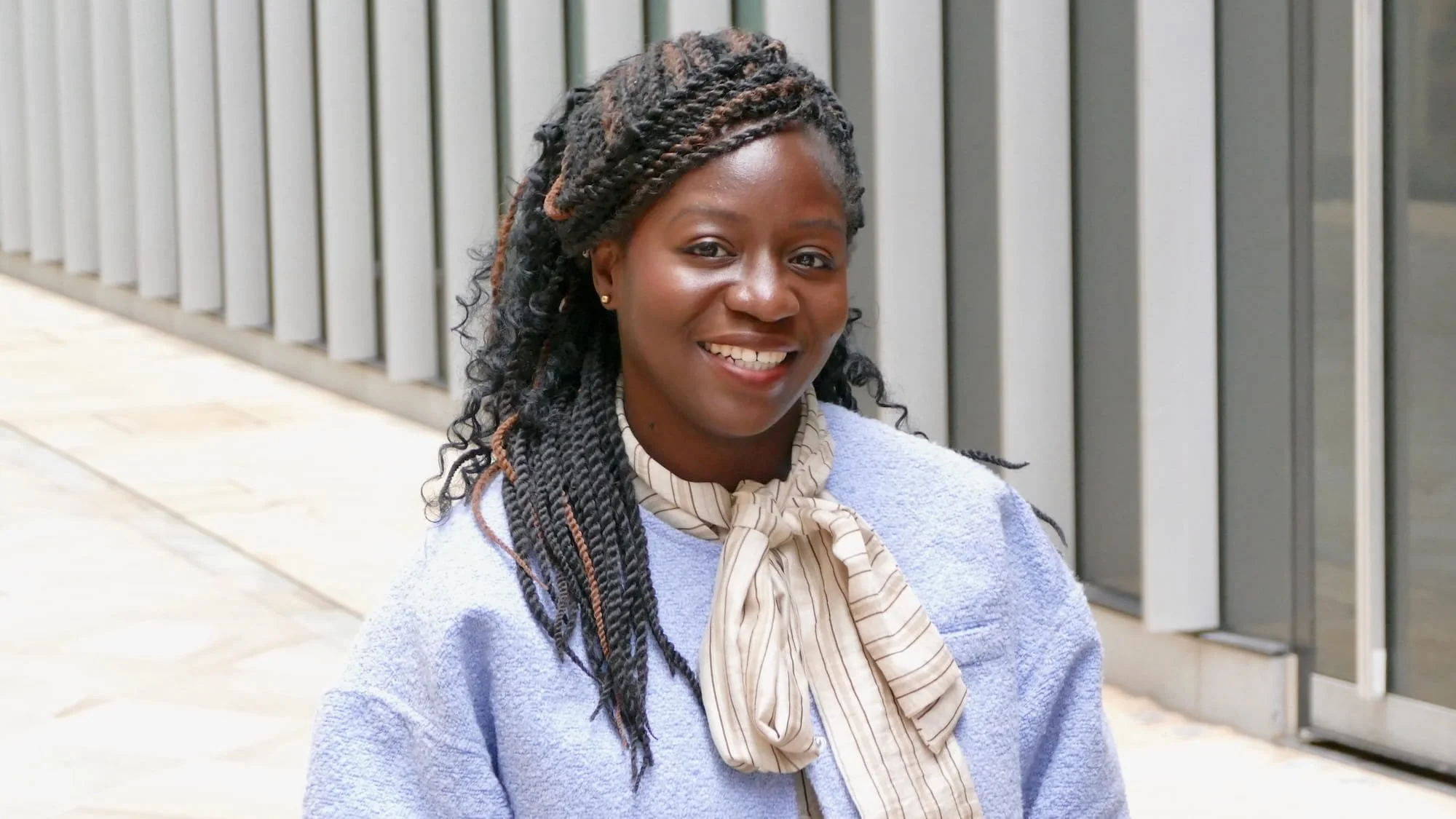
"I encourage parents to trust their instincts and be open to following their gut in the moment"
Claudette has been a Bump & Baby Club instructor since 2021, teaching our antenatal classes in Woking. With a midwifery career spanning 17 years, she's built a wealth of experience — and we loved sitting down with her to hear about life on the job.
What have been some of the highlights of your career as a midwife?
I loved my time as a Community Midwife and, without a doubt, the highlight was home births. I spent about 8 years in the role and had the privilege of getting to know families from their very first appointments, through the highs and challenges of pregnancy. If I was able to attend their home birth, that was the cherry on the cake! Having that relationship and trust already established makes such a difference and those experiences will always be career highlights for me.
I can remember several home births vividly, including those in the middle of the night while I was pregnant myself. It wasn’t always easy but there was nowhere I would have rather been. It felt like we were both in a special little bubble together.
Even if I wasn’t there for the birth itself I still got to care for the women postnatally, meet their babies, support them with feeding and help them through the fourth trimester, which was also amazing.
Did becoming a mother yourself change your understanding of pregnancy and birth at all?
I had been a midwife for 10 years before I became a mother and had always thought of pregnancy as a little slice of magic - I probably put it on a bit of a pedestal. My own experience was definitely a little rockier than I’d expected and I never got that second-trimester glow everyone talks about! Supporting other women had taught me a lot, but experiencing it myself gave me a different level of understanding.
The biggest surprise though was how little I knew about supporting scar recovery after a caesarean birth. I had two caesareans myself and I wish I’d known to look into scar rehabilitation. Midwives are trained to look after women for up to 28 days after their baby’s birth but scar formation through the seven layers disrupted during surgery has really only just begun at that stage. There is so much change that happens as the wound matures, affected by hormones and lifestyle, so it wasn’t something I knew enough about before I was on that journey myself. We wouldn’t expect someone to recover from a knee or hip replacement without rehabilitation, but we don’t always have the same conversations after a caesarean. So that’s why I work as a c-section scar therapist now, alongside my NHS role.
Do you think motherhood changed you as a person?
Motherhood has definitely changed me. I have always been quite academic and a bit of a perfectionist - I was the teacher’s pet growing up - but becoming a mother made me realise that it isn’t about being perfect. It’s about showing up. There really isn’t anything I can do for my children, buy for my children, or any class or club I can send them to that will have the same impact as simply being with them. That’s probably the biggest lesson motherhood has taught me - it isn’t about being perfect, it's about being there for them. That’s all they really need.
It also changed the balance of my life. Before having children I could give all of my time, energy and focus to midwifery. When I became a mother I had to learn how to compartmentalise different parts of my life and juggle responsibilities to the best of my ability. I never feel like I’m dropping the ball at work, but I can’t always stay after my shift in the way I could before. I’m always giving 100% while I’m at work, but there are times when I wish I could stay another hour to be there for a birth. I don’t always have the flexibility I had before becoming a parent.
Do you talk about this in your Bump & Baby Club classes?
Yes. We talk about this when we’re discussing the transition into the fourth trimester and matrescence, the emotional journey into motherhood. And we talk about how you’re going to figure things out in parenthood - you don’t know how you’re going to do it until you’re actually doing it! The pre-baby version of you doesn’t know how you’re going to think or feel or how life will work. Once you’ve met your baby, you adapt.
Many parents worry that they’re not organised enough or that they won’t be able to fit everything into their life. I try to help them take the pressure off themselves. As long as you have the right support around you, you’ll find your way. Also, I tell them they’ll hear lots of different advice, but ultimately they know what feels right for them and their baby. That’s important to remember.
It’s the same with labour and birth. We can make lots of plans during pregnancy, but what feels right at 36 weeks pregnant, while you’re sitting in my antenatal class, may feel very different on the day you give birth. I encourage parents to trust their instincts and be open to following their gut in the moment.
Can you talk about your work as a c-section scar therapist? Firstly, what is scar rehabilitation?
It’s things you can do to support how the tissues around your scar heal and change. It can help keep your scar flexible, so it doesn’t become rigid, pinned down, puckered, itchy or uncomfortable. It’s a way to manipulate the tissues around your scar so it feels better and, if it’s important to you, to look better too. It can also help improve numbness, hypersensitivity, pain and inflammation. And it can help if your scar is swollen, puffy or raised.
It can also promote fascial release. Fascia is a connective tissue that runs all the way through your body, around your muscles and other structures. As your scar heals and contracts, your fascia can become tight. That can affect your posture and the way you move. So scar therapy works deeper than the skin level - it works through the muscles and fascia beneath the skin.
How important do you think scar therapy is?
I think scars come with a lot of emotional ties to them, whether they’re from planned surgery, an emergency, an accident or a traumatic experience. Every scar on your body holds some sort of meaning for you. If your scar feels tight, itchy or uncomfortable, that’s pain you don’t need. If there’s something you can do to remedy or ease that, why wouldn’t you? Especially when you’re caring for a baby or a growing family. Self-care is so important and the rest of your family is more likely to thrive when you feel whole. You can be the best version of yourself, a happier mum, a more present mum when you make time to look after yourself too.
I find the work I do as a scar therapist very rewarding because, as a midwife, I’d usually only see women up until 28 days after birth. I hadn’t had the opportunity to support them between pregnancies, or after their families were complete. It’s been fascinating to work with women as they navigate their new normal - seeing how they adapt beyond those first 28 days and walking alongside them through that next stage of their journey.
What inspired you to become a midwife in the first place?
I have always been around babies and children and I was always drawn to pregnancy and birth. I think I have quite a nurturing nature. I briefly considered becoming a paediatrician but midwifery aligned more closely with my values - I loved the idea of the holistic package and knew it was the right path for me. I’m 17 years into my career now and can say it suits me perfectly. I’ve always joked that if you cut me through the middle, it would say ‘midwife’, like a stick of rock!
What is your current role within the NHS?
At the moment I’m looking at health inequalities in maternity care and thinking about how we can better support families with complex needs - those which aren’t always met by the traditional model of care. The NHS has traditionally been built around a fairly standard model of care, but we know that this doesn’t work well for everyone. We’re finding ways to offer more individualised, personalised care on a wider scale, so that we can reach and support families who might otherwise be left behind. There is a huge variation in the services families can access depending on where they live. Often there are a lot of services available, but people don’t know about them or how to access them effectively.
I’ve been working to reduce health inequalities in maternity care as a whole, which I’m really passionate about. I love that I can support families through antenatal classes at Bump & Baby Club, while also working in more specialist midwifery roles, it’s all really really enjoyable.